
About us

Primetals Technologies, Limited, headquartered in London, United Kingdom, is a pioneer and world leader in the fields of engineering, plant building, and the provision of lifecycle services for the metals industry. The company offers a complete technology, product, and services portfolio that includes integrated electrics and automation, digitalization, and environmental solutions. This covers every step of the iron and steel production chain – from the raw materials to the finished product – and includes the latest rolling solutions for the non-ferrous metals sector. Primetals Technologies is a joint venture of Mitsubishi Heavy Industries and partners, with around 7,000 employees worldwide.
In Russia, Primetals Technologies is represented by Primetals Technologies Russia Limited Liability Company, consisting of two divisions in Moscow and Yekaterinburg.
The main division in the city of Moscow is engaged in general administration of the Company's work, and also conducts research and analysis of trends in the metallurgy market; develops the potential of the sales market in its region and in the channel for the distribution of the assigned products, solutions, and services; carries out sales and the achievement of the planned rate of return in accordance with the business strategy; provides sales support to the HQ in the Russian market; carries out visa support and provides translation services to the employees of Primetals Technologies Russia LLC and to other affiliated companies.
A separate subdivision in the city of Yekaterinburg is engaged in the design of electrical equipment and automation systems for ferrous and non-ferrous metallurgy. The subdivision's areas of activity also include the supply, assembly, and commissioning of automation systems for production and for machine control.
Over years of work, Primetals Technologies Russia LLC has managed to accumulate a lot of experience in executing both minor and major projects. Our client base comprises around 50 steel plants.
Our simple hierarchy and flexible business model make us constantly available. Around 80% of our employees have over 10 years of professional experience, which is a solid foundation for trust from our clients.
For us, the foremost significance lies in searching for the best solutions and satisfying the expectations of the clients and the market, in generating new ideas and bringing them to life in order to become a consistent leader in our industry.
Competences
Our expertise along the entire value chain

Digitalization — industry 4.0
Metals Orchestra – Instruments for the digital era of steel
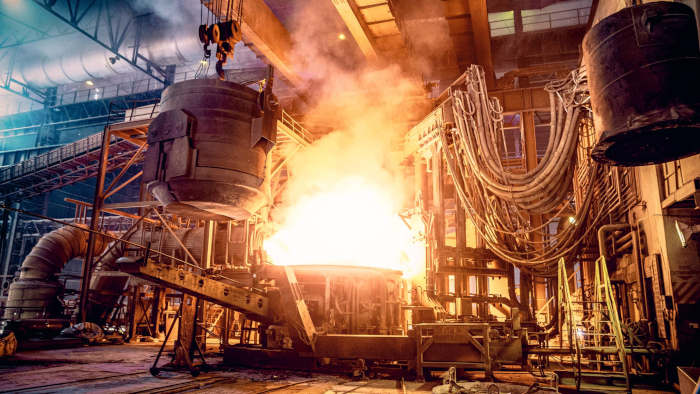
Imagine your steel plant as an orchestra where all components work in harmony to manufacture products of highest quality. The “smart” plants of the future contain equipment that is interconnected and can be orchestrated with ease to deliver unparalleled efficiency and reliability.
Up to date with electrics and automation
The rising demand for flexible and efficient production processes results in a growing need for integrated electrics and automation solutions during the whole lifetime of metallurgical plants.
Primetals Technologies is the leading supplier of electrics and automation products, solutions and services for the metals industry. The objective is to help our customers optimize availability, profitability and product quality. The Electrical and Automation portfolio spans from basic process automation, power solutions and drives systems to technological process modelling and production planning. In addition we provide modernization packages and Lifecycle Services along the entire production chain. With our global EA setup we realize local support and long term-partnership with our customers to offer specific solutions & services based on our know-how and their individual requirements.
Lifecycle services for steel plants
Reliable technical support, plant upgrades, and proven maintenance services.
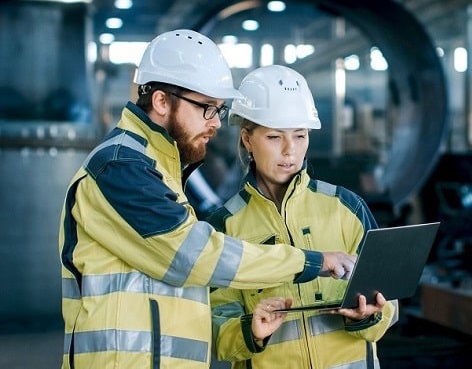
Primetals Technologies has the experience required to deliver the full spectrum of technical support, consulting, staff training, and next-level e-services quickly and reliably. We thrive on long-term partnerships with customers, and that’s why we can offer a set of dedicated services that are in place for the entire lifecycle of a steel plant. We are a full-service provider of technical support that includes upgrades, repairs, just-in-time spare parts, and on- and offline maintenance to keep steel plants operating at peak performance. Our service team can help steel plants to slash costs, increase productivity, improve product quality, and raise safety standards.

Eco solutions — saving resources, creating value
Due to rising energy prices and stringent environmental regulations, energy efficiency, resource saving and climate protection are becoming more important than ever. Primetals Technologies ECO Solutions offers a wide range of services and technologies to increase energy efficiency, reduce the environmental impact of steel production and to ensure efficient water and by-product management.
Primetals Technologies ECO Solutions provides processes and solutions along the entire iron and steel production chains, which meet the strictest emission regulations and also help producers achieve substantial cost savings. Further, in response to these ecological and economic challenges, Primetals Technologies offers energy-efficient solutions and services along the entire process chain, with a clear objective: saving resources, creating value. The optimized consumption of energy and raw materials, the application of advanced technological processes and the maximum degree of recycling lead to major energy savings, reduced emissions, improved water and by-product management.
Areas of activity
Primetals Technologies Russia LLC offers the following work and services:
- Research and analysis of trends in the metallurgy market;
-
Electrical systems engineering, medium and low voltage:
- Engineering of power distribution systems, control cabinets, and motor control centers, as well as control systems for medium-voltage alternating-current electric drives and low-voltage direct- and alternating-current electric drives.
- Basic engineering (collecting source data and revealing project specificities; establishing the main principles and requirements for carrying out design work), detailed engineering of E&A equipment and power supply / control systems (development of systems for process control and drive control; detail engineering for cabling), assembly engineering using CAD software: EPLAN, AutoCAD, SIGRAPH.
- Preparation of inquiries to design institutes for the development of design documentation for passing the State Expert Review (for projects in Russia).
-
Software engineering for Level 1 automation systems:
- Software engineering for Level 1 automation based on automation tools and software products from Siemens (STEP7, PCS7, WinCC, TIA-portal), as well as from Allen-Bradley, Schneider Electric, Omron, Wonderware.
- Integration and implementation of interfacing between all control systems in use.
- Preparation of instruction manuals for operators and operations personnel (on subjects such as: setup of software and information systems; description of methods for setting up equipment mechanically and electrically).
-
Software engineering for Level 2 automation systems:
- Software engineering for Level 2 automation based on software products C# (.Net), Java, C/C++, Oracle, MS SQL, CLC, VBA
- Data acquisition and storage systems, human-machine interface (HMI), user-friendly output of process parameters, reporting.
- Process modelling, long-term archiving, interfacing with other levels of general shop / general plant automation.
-
Site works:
- Installation supervision and commissioning, both in Russia and abroad.
- Consulting services.
- Training of the Customer's operations and process personnel.
- After-sales support.
-
Creating a digital twin of the production line:
- 3-D modelling of the shop space (arrangement of the lifting equipment and ground transport; transport route; specification of speed and load-related characteristics).
- Main process equipment (XYZ positioning of the main process equipment's points; specification of technical characteristics).
- Control and logistics (creating the process route; logistics simulation software, logistical operations efficiency analysis).
Set of activities directed at commissioning the software and the APCS¹ information systems includes the following:
- checking the assembly of APCS equipment (PLCs²) in telecommunications cabinets;
- checking the assembly of the electric supply and grounding system;
- assembly and installation of IT equipment in server racks and its commissioning, as well as its connection to the electric network and backup power supply system;
- assembly of local network segment for data exchange between the PLCs (automation Level 1), distributed input / output systems (field level), HMI process visualization system, and the process automation system (Level 2);
- setup of network parameters for organizing communication with the PLCs / HMIs and the PCs / Server of automation Level 2;
- setup of the access rights of information system users;
- setup of special software and databases for organizing storage and distribution (routing) of emergency messages and archive values;
- correction of the existing databases with the setup and filling out of all catalogs;
- software setup, and making changes in the software where required, in accordance with the Software Change Manual, with the aim of optimizing software and eliminating its faults, in accordance with the project solutions (functional description, technical documentation);
- system software setup for operator stations (PCs) and optimization of application software for HMI process visualization;
- training the Customer's personnel within the framework of operating the automated control system (group classes for the Customer's personnel held in accordance with the training plan);
- correction of programs that make up the IS when they produce wrong results under the conditions of being limited by the Technical Assignment and the documentation;
- expansion of functional capabilities and improvement of the characteristics of solutions for specific tasks in accordance with the new or supplemented Technical Assignment.
*APCS – automated process control system
*PLC – programmable logic controller
Documentation
Certificates and licenses:
Watch in full
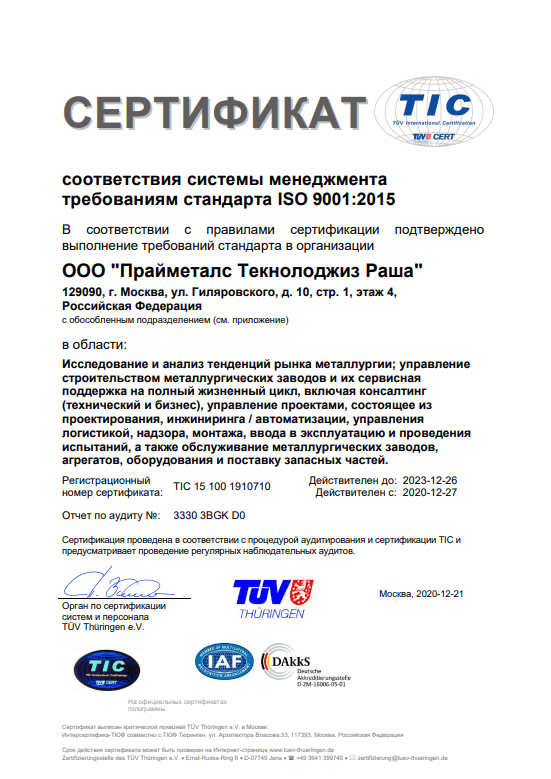
Certificate for the management system according to ISO 9001:2015
Watch in full
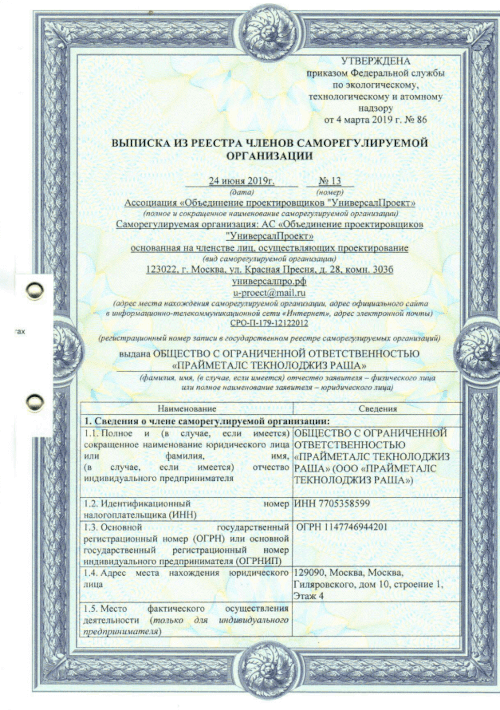
Extract from the register of members of the self-regulatory organization (project group)
Watch in full
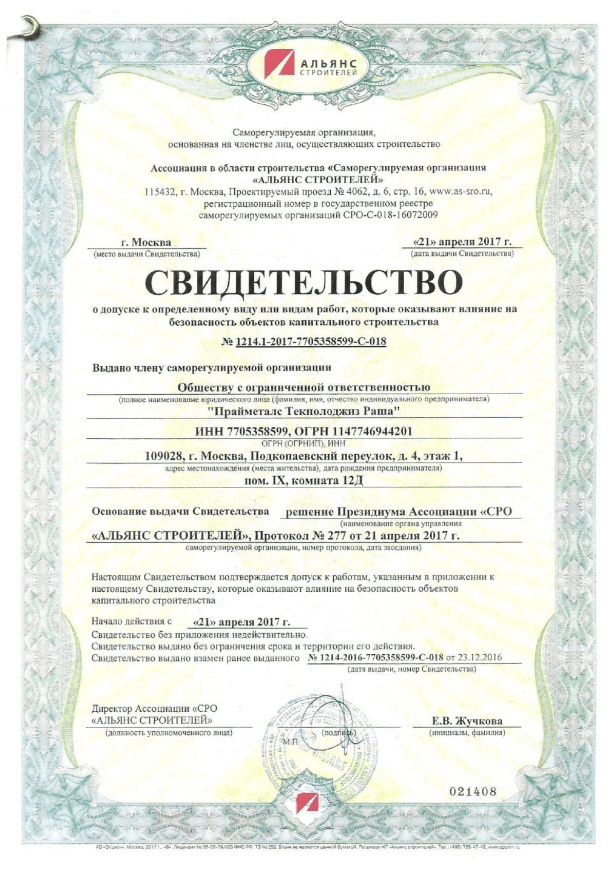
Certificate of admission to certain types of work (construction group)
Watch in full
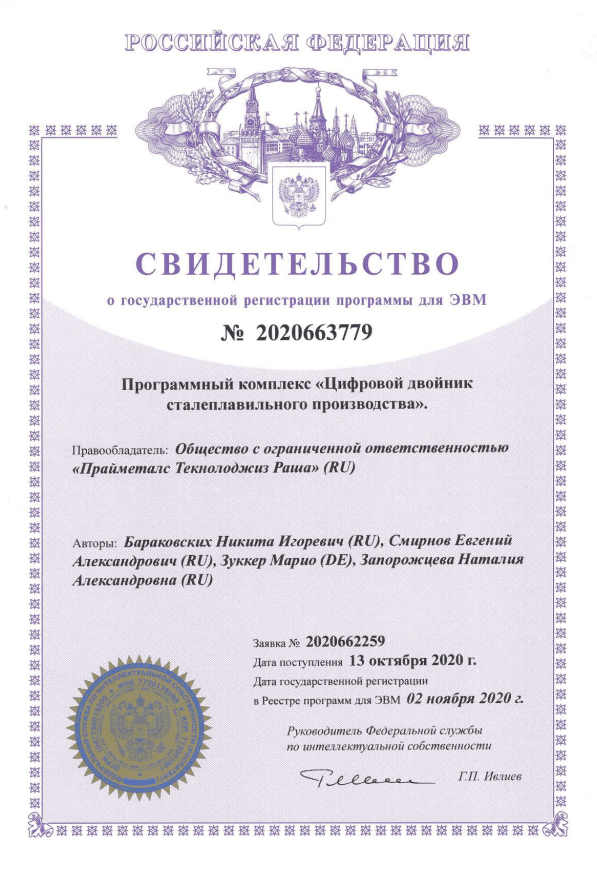
Registration certificate of the "Digital twin for steel-melting" software system
Policies:
News
- Upgrade of pickling line and tandem cold mill ensures increased production
- First coil produced on schedule despite challenges related to the pandemic and availability of spare parts
In September, Chinese steel producer Valin ArcelorMittal Automotive Steel (VAMA) produced the first coil at its Phase 2 upgraded pickling line and tandem cold mill (PLTCM) in Loudi, Hunan province, China. Implemented by Primetals Technologies, the upgraded tandem cold mill is designed as a 5-stand 6-high rolling mill and is set to produce steel grades for the automotive industry.
Increased production
In 2014, Primetals Technologies supplied the PLTCM, and the main reason why VAMA seven years later awarded the Phase 2 contract to Primetals Technologies was their good experiences from the former project.
The PLTCM will, thanks to the upgrade, handle an increased production capacity coming from an additional, recently implemented processing line. During the Phase 2 project, Primetals Technologies upgraded the PLTCM with a second entry passline, an additional mill stand, and a pickling tank. New drives, automation hardware, extension of the Level 2 automation system, and supervision of the mechanical and electrical implementation were also included in the Phase 2 upgrade.
Collaborative approach
The team at Primetals Technologies faced several challenges during the project. The current shortage of electrical components, for example, microchips and automation equipment, resulted in difficulties to get all the equipment ready for shipment to China on schedule. In addition, Covid-19 restrictions in China added complexity and a level of uncertainty to the project. However, despite the challenges and thanks to a successful collaborative approach, the first coil was produced on time.
A joint venture between Valin Steel Group and ArcelorMittal, VAMA is a steel producer focused on automotive steels with an annual production of 1.5 million tons. The annual capacity will increase when Phase 2 is completed for the whole plant.
Key facts: VAMA’s upgraded PLTCM
Mill Type: 5-stand 6-high continuous tandem cold mill
Strip Thickness: incoming from 1.8 to 6 millimeters, final from 0.35 to 2.5 millimeters
Strip Width: from 900 to 1,890 millimeters
- Project included modernization of existing electric arc furnace
- Primetals Technologies supplied a new twin ladle furnace and new material handling system
- Overall plant capacity to increase substantially
- Comprehensive plant optimization thanks to a high degree of automation and the use of robotic systems
- Robotic systems to further improve occupational safety
Primetals Technologies has received the final acceptance certificate (FAC) from Gerdau Special Steel North America for the modernization of its electric steel plant in Monroe, Michigan, U.S.A. The project included modernizing the existing electric arc furnace (EAF). The electric steel plant was also equipped with a new twin ladle furnace, a new material handling system, and related auxiliary equipment.
Increased productivity
This upgrade has increased the plant’s overall annual production capacity of special rolled end products. End-to-end automation and the use of LiquiRob robot systems increase productivity and reliability, optimize workflows in the steelworks, and reduce operating costs. The robotic systems also improve worker safety by performing potentially dangerous tasks, such as taking temperatures and samples.
A complete package
Gerdau Special Steel North America is a leading manufacturer of special steel bars, which are mainly used in the automotive industry. Gerdau selected Primetals Technologies based on the overall technical solution proposed. The company also appreciated that Primetals Technologies would provide the complete package — mechanical equipment, electrical and automation equipment, and a high-power EAF revamp solution. Additionally, Primetals Technologies provided a compact and technologically advanced solution for the twin ladle furnace and integrated the new material handling system in accordance with the requirements of the existing plant.
Improved safety measures
This project was part of an investment package to modernize the plant and increase employee health and safety. Primetals Technologies was responsible for engineering and supplying the process equipment for the EAF, the 110-metric-ton twin ladle furnace, the material handling system, auxiliary equipment, and the structural steel work. The company also supervised the construction and commissioning of all installations. The scope of delivery encompassed the associated electrical installations and automation, the power supply — including transformers, the complete end-to-end process automation, and three LiquiRob systems. Solutions such as automatic sand refilling, a weighing system, and the automated tap hole manipulator are now optimizing EAF operation and increasing worker safety.
- Designed to replace the blast furnace
- Reduces CO2 emissions to a minimum
- Technology ready for implementation
Most of the CO2 emissions in steelmaking comes from the blast furnace process, which today is still the main production route. Primetals Technologies is developing a new green steel technology to replace blast furnace plants and has signed a collaboration contract with RHI Magnesita, the global leader in refractory innovations.
Greatly reduced CO2 emissions
The new solution is called the Smelter, a furnace powered by electrical energy and used for melting and final reduction of direct reduced iron (DRI). Operated together with a direct reduction plant and an LD converter (BOF), the Smelter is producing hot metal for the steelmaking plant and liquid slag that can be used in the cement industry.
The conventional BF – LD converter route results in almost two tons of CO2 per ton of liquid steel. Thanks to the new technology, CO2 emissions will be reduced by a factor of six, to 0.33 tons of CO2 per ton of liquid steel.
"If you are serious about green steel, you have to start with the blast furnace processes, i.e. where the CO2 emissions are massive. RHI Magnesita has been working closely with both steel and non-ferrous industries around the world for years. We are proud to be an integral part of the push for the development of green steel production solutions together with Primetals Technologies, not only as supplier of refractories but also as a technology partner,” says Constantin Beelitz, President Europe, CIS & Turkey at RHI Magnesita.
Gerald Wimmer, Vice President of Converter Steelmaking, Primetals Technologies, adds: “RHI Magnesita and Primetals Technologies have extensive experience in the development of new technologies. That is an excellent base for successfully developing just the right technology for steel producers who struggle to find a replacement for the blast furnace.”
Plant transitionwithout downtime
For steel producers, there are two main cost related benefits that comes with the Smelter. The DR – Smelter – LD converter route can be used especially for low grade iron ores, as it handles the generated slag well. Additionally, the LD converter is kept when the Smelter is implemented. Therefore, steel producers who operate integrated plants do not need to modify the rest of their production chain and do not have to renew their certifications when they invest in a Smelter.
It will also be possible to keep the blast furnace running while installing the Smelter, and to then discontinue the use of the old equipment as soon as the Smelter is ready for operation.
Ensuring a long lifetime
An important part of the Smelter, the refractory material protects the furnace shell by containing hot metal at temperatures of at least 1,500° Celsius. Consisting of bricks, it expands when heated and endures extremely high temperatures. The performance of the refractory material is determined by several factors, such as size, quality, mechanical furnace design, and cooling solutions. RHI Magnesita and Primetals Technologies have put their heads together and found a reliable refractory solution for the Smelter, which will ensure high productivity and a long lifetime.
Ready for the market
In the coming years, more and more steel producers will invest in green steel technology. The Smelter is a sensible and still environmentally friendly option to extend the lifetime of existing integrated steel plants, as there will be just minor adjustments necessary at the plant.
Primetals Technologies’ and RHI Magnesitas’ collaboration has already been in effect for some time and several simulations were executed in the project over the last months. Therefore, the Smelter is ready for the market.
Contact information
E-mail: info@primetals-ru.com
Legal address: 10 Gilyarovskogo str., bld. 1, 4th floor, Moscow, 129090
Physical address of the Moscow office: 10 Gilyarovskogo str., bld. 1, 4th floor, Moscow, 129090
Moscow office phone #: +7 (495) 114-55-18
Physical address of the Ekaterinburg office: Karl Liebknecht str., bld. 4, Ekaterinburg, 620075
Ekaterinburg office phone #: +7 (343) 379-23-95